




Comprehensive Solutions for Vision Impairment: Driving Improvements in National Education, Healthcare, and Workforce Productivity
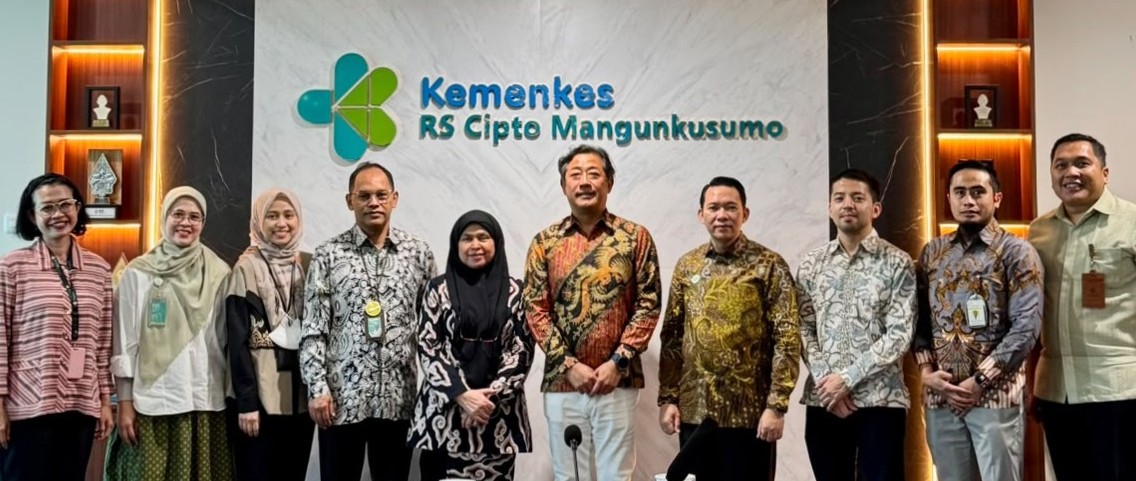
PT CUC HEALTHCARE INDONESIA (CHI), a subsidiary of Tokyo-based CUC Inc., has signed a strategic partnership with Dr. Cipto Mangunkusumo National General Hospital (RSCM), a major general hospital in Indonesia and the teaching hospital for the University of Indonesia.
This collaboration is set to revolutionize ophthalmology services, particularly in refractive correction services, to address the widespread challenge of vision impairment in Indonesia.
Background: Vision Impairment Challenges in Indonesia
According to the World Health Organization (WHO), refractive errors (myopia, hyperopia, astigmatism, and presbyopia) are the second leading cause of vision impairment globally [1]. These conditions are estimated to cause a massive global productivity loss of approximately $411 billion annually [1].
This challenge is particularly acute across Asia. Reports indicate that 80 to 90% of teenagers in East Asia are affected by myopia, with up to 20% suffering from high myopia [2]. Indonesia is facing a similarly critical situation, where approximately 44% of school-aged children are expected to have vision-related issues [3].
Vision impairment is a profound social issue that extends beyond physical disability; it directly impacts education and labor, which are fundamental to sustainable national growth. Expanding ophthalmology infrastructure has reached a critical juncture for maintaining and strengthening Indonesia’s national competitiveness. It serves as an “Educational Investment” to maximize children’s learning potential and future opportunities, as well as a “Health Investment” to boost the productivity of the working-age population.
Key Components of the Partnership
This partnership leverages the Joint Operation (KSO – Kerja Sama Operasi) framework [4]. By pooling resources-CUC’s advanced equipment and operational expertise, RSCM’s clinical excellence and facilities, and the support of medical supply distributors-this model enables the rapid deployment of advanced medical services while effectively managing initial capital requirements.
1. Implementation of Cutting-edge Technology and Stable Operations
CUC is responsible for the selection, procurement, and maintenance of the latest refractive equipment, while RSCM provides the clinical services. CUC will also establish a rigorous system for precision equipment maintenance and operating room environmental management, thereby creating an environment that ensures a consistent, high-quality treatment.

2. Improving Operational Efficiency and Strengthening Regional Healthcare
Leveraging the healthcare management expertise cultivated in Japan, CUC will provide operational support, including the optimization of clinical workflows. By building a foundation capable of serving a larger patient volume, the partnership will contribute to the qualitative improvement of regional healthcare standards.
Advanced Refractive Surgeries and Procedures
We will introduce the latest refractive technologies designed to treat myopia, hyperopia, and astigmatism with high precision and relatively short recovery times.
LASIK with Cross-Linking for Corneal Strengthening: A service that combines conventional refractive correction with corneal cross-linking to strengthen the cornea and enhance the long-term stability of results.
Lenticule Extraction: A minimally invasive, “flapless” [5] refractive procedure using femtosecond lasers. Recognized as one of the latest vision correction techniques for myopia and myopic astigmatism, it offers diverse and optimized treatment options tailored to individual corneal characteristics and visual needs.
Applications for Corneal Diseases: Beyond vision improvement, corneal cross-linking technology is utilized to treat specific corneal conditions, particularly progressive keratoconus and corneal ectasia, by stabilizing the corneal shape. Furthermore, it is increasingly used as an adjunctive therapy for certain corneal ulcers and infectious keratitis, aiming to halt the damage process through tissue strengthening and supplemental antimicrobial effects.
Future Outlook
Aiming for a full-scale rollout of our services by the end of 2026, we will expand the high-quality medical operations developed through this project to healthcare institutions across Indonesia. Through this initiative, we aim to facilitate the adoption of advanced medical care in regional cities and contribute to the long-term, sustainable improvement of the nation’s Quality of Life (QOL).
Using the model established with RSCM as a starting point, we are committed to drive nationwide expansion to major medical institutions and regional hospitals throughout the country. Looking ahead, we aim to introduce advanced surgical techniques and quality control guidance through our Japanese specialist network, while supporting local professional education and clinical research.
Comments
Dr. Supriyanto, Sp.B, FINACS, M.Kes (Director of Dr. Cipto Mangunkusumo Nasional General Hospital)

This partnership represents a crucial strategic milestone in enhancing ophthalmic healthcare services across Indonesia. As the nation’s premier top-tier referral general hospital, RSCM is fully committed to delivering medical care that brings a substantial and positive impact to our community. We highly anticipate that improving the quality of vision will significantly boost individual productivity, mobility, and the overall quality of life.
Dr. Takeshi Teshigawara, Ph.D., MBA, Chief Medical Officer of Chuo Eye Clinic Group

The introduction of world-class refractive surgery technology at the RSCM marks a significant milestone for ophthalmology in Indonesia. Refractive error is a critical public health challenge that affects educational opportunities and labor productivity; improving access to advanced care will bring long-term benefits to society as a whole. Through the sharing of international clinical expertise, we look forward to fostering local medical talent and driving a sustainable advancement in the standard of care.
Profile: Dr. Takeshi Teshigawara, Ph.D., MBA
Chief Medical Officer, Chuo Eye Clinic Group, Director, Yokosuka Chuo Eye Clinic, Postdoctoral Fellow, University of California, San Francisco (UCSF), University of Bath (UK), Clinical Professor, Department of Ophthalmology, Yokohama City University School of Medicine.
Since 2020, Dr. Teshigawara has collaborated with the CUC Group to share valuable insights for the development of ophthalmology and the cultivation of medical professionals worldwide.
About Chuo Eye Clinic Group
Chuo Eye Clinic Group is a prominent medical group operating five ophthalmology clinics in Japan. The group provides a comprehensive and specialized medical system covering all eye diseases—from examination, diagnosis, and counseling to surgery and post-operative care.
In the field of refractive correction, the group is particularly active in advanced treatments, including cataract surgery with multifocal intraocular lenses (IOLs), myopia correction using Phakic IOLs (ICL), and myopia progression control. The group’s extensive surgical experience is demonstrated by its record of 3,651 cataract surgeries performed between April 1, 2024 and March 31, 2025. The group is committed to providing inclusive healthcare with a focus on patient hospitality.
Website: https://www.chuoh-eye-clinic.com/
About the Partners
<About RSUP Nasional Dr. Cipto Mangunkusumo Hospital (RSCM) >
RSCM is a major general hospital in Indonesia, located in Jakarta. As the primary teaching hospital for the University of Indonesia, it serves as a leading national referral center (a core facility providing highly specialized medical care and receiving prioritized patient referrals) for the country.
RSUP Nasional Dr. Cipto Mangunkusumo (RSCM)
Location: Jl. Pangeran Diponegoro No.71, Kenari, Kec. Senen, Kota Jakarta Pusat, Daerah Khusus Ibukota Jakarta 10430, Indonesia
Founded: November 19, 1919
President Director: Dr. Supriyanto, Sp.B, FINACS, M.Kes
Number of Beds: 1,181
Website: https://rscm.co.id/id/new
<About CUC Inc. >
CUC Inc. is a global healthcare group comprising 19 domestic and 28 overseas consolidated subsidiaries (as of the end of March 2026). With its mission of “Creating Hope through Healthcare,” CUC provides comprehensive support for medical institutions and offers diverse services including hospice and home-visit nursing care both in Japan and abroad.
CUC Inc.
Location: 15F, Tamachi Station Tower N, 3-1-1 Shibaura, Minato-ku, Tokyo 108-0023, Japan
Established: August 8, 2014
Representative: Keita Hamaguchi, Representative Director
Listed Market: Tokyo Stock Exchange Growth Market (Code: 9158)
Capital: JPY 7.669 billion (as of March 2026)
Main Business: Healthcare management support for medical institutions
Website: https://www.cuc-jpn.com/en/
<About PT CUC HEALTHCARE INDONESIA(CHI) >
PT CUC HEALTHCARE INDONESIA is a consolidated subsidiary of CUC Inc., providing medical institution support and Joint Operation (KSO) schemes in the fields of dialysis and ophthalmology in Indonesia.
PT CUC HEALTHCARE INDONESIA
Location: Jl. Jenderal Sudirman No.Kav. 25, Kuningan, Karet, Kecamatan Setiabudi, Kota Jakarta Selatan, Daerah Khusus Ibukota Jakarta 12920, Indonesia
Founded: August 31, 2023
Representative: Takamichi Tanabe, President and CEO
Capital: 85.5 billion IDR
Parent Company: CUC Inc.
Main Businesses: Medical Institution Support (Ophthalmology/Dialysis), Medical Tourism, Support for Foreign Human Resources
Track Record in Indonesia:
Dialysis: Supported the introduction of approximately 300 medical devices in total.
Ophthalmology: Developed management support and KSO partnerships across 3 facilities.
Website: https://cuc-chi.com/en
References:
[1] World Health Organization (WHO). Blindness and vision impairment. WHO Fact Sheets. 2026. [2] Yulia DE, Barliana JD, Soeharto DA, Tan S. Profile of refractive errors in children at dr. Cipto Mangunkusumo Hospital. eJournal Kedokteran Indonesia. 2025;13(1):75-79. [3] World Health Organization (WHO). Indonesia commits to improving affordable and equitable eye health services. WHO website. 2026. [4] The hospital and the investor enter into a business alliance, with the investor provisioning medical equipment under a revenue and profit-sharing model. [5] Flapless Surgery: A surgical method that does not involve creating a corneal “flap,” instead applying the laser directly to the corneal surface.<Appendix>
1. Overview of Ophthalmology KSO Provided by CUC
CUC utilizes the KSO scheme, which provides comprehensive support to medical institutions, ranging from the provision of the latest medical equipment to operational support. This three-party collaboration model enables the rapid adoption of advanced medical technologies by minimizing the initial capital investment burden for medical institutions, while ensuring sustainable business operations.
1) Resource Allocation and Roles
Under this KSO scheme, CUC, the partner institution, and medical supply distributors fulfill the following roles:
CUC: Owns the fixed assets (medical equipment, etc.) required for treatment and provides them to medical institutions through leasing/rental schemes. Additionally, CUC provides Japanese-style operational consulting, patient acquisition marketing, and clinical skill enhancement.
Hospitals: Responsible for providing treatment rooms, securing physicians and nursing staff, and obtaining the necessary licenses for clinical operations.
Medical Supply Distributors: Responsible for the supply and sale of essential medical materials and consumables required for treatment. 2) Revenue Structure
By appropriately distributing the business revenue generated from the use of equipment and materials provided, hospitals strive to disseminate cutting-edge medical services while alleviating the financial burden on the hospital side.
3) Characteristics of CUC’s KSO
CUC’s KSO goes beyond mere equipment lending by providing hands-on support for medical institutions:
Facility Environment Development: Providing facility design advice to ensure patients receive care in a comfortable environment.
Operational Optimization: Establishing efficient operations and providing marketing support to reach a broader patient base.
2. Specific Target Areas and Scope of Support
We provide advanced medical equipment and treatment environments primarily for the following four disease and treatment areas:
Cataract: Supporting Phacoemulsification (Phaco) techniques using high-reliability microscopes and precise intraocular lens power calculation with IOL Master. Providing world-standard monofocal and multifocal intraocular lenses.
Glaucoma: Establishing accurate examination systems with perimetry (visual field testing) and tonometry (intraocular pressure). Supporting the prevention of disease progression with the latest lasers (SLT, PRP) and promoting Minimally Invasive Glaucoma Surgery (MIGS).
Retinopathy (Retina & Vitreous): Detailed examinations using OCT (Optical Coherence Tomography) and progression prevention using lasers (PRP). Promoting intravitreal injection procedures and vitreoretinal surgery.
Refractive Correction (LASIK): Providing top-tier German-made laser equipment. Building clean-room operating environments that meet global standards (renovations, etc.) to enhance patient comfort. Implementing service implementation support and accuracy control through collaboration with manufacturers and Japanese specialists.
3. Values for Partners
CUC provides strategic value to both medical institutions and KSO operators:
Support for Medical Institutions: For hospitals looking to establish new ophthalmology units or expand existing ones, we provide extensive management support, ranging from funding assistance consulting to the transfer of Japanese-style medical operational knowledge.
Support for KSO Operators (Distributors, etc.): For local distributors facing business expansion constraints due to limited capital or resources, we assist in business growth through funding support, cost reduction via centralized procurement of consumables, and the sharing of operational management expertise.